

March 25th 2026
Thanks to Archbishop Anthony Fisher for allowing us to publish this Homily
Homily for Mass for the 5th Sunday of Lent (Year A)
+ Day of the Unborn Child
St Mary’s Cathedral, Sydney, 22 March 2026
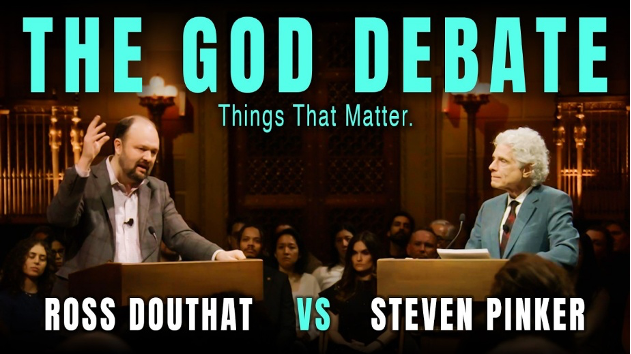
Last month Harvard psychologist Steven Pinker and New York Times columnist Ross Douthat came together for a debate on Do We Need God?[i] It was a fascinating exchange between two serious thinkers. Pinker argued that we don’t need God since science has delivered so much progress in medicine, welfare, law and more. Morality, in his estimation, can stand perfectly well on our common humanity and good reasoning. But introduce religion, and we end up killing each other over arcane beliefs.
Douthat, a practicing Catholic, pushed back. As Western nations have become more secular, they have also become more polarised, angry, despairing. They take morality less seriously and value human life less gravely. Atheistic ideologies like Marxism and Fascism have been catastrophic in their bloodletting. And however philosophically defensible human dignity and rights might be in the academy, they are far from self-evident to ordinary people and not amenable to Pinker’s microscopic investigation. In fact, Douthat argued, the best secular moralities rest upon often unrecognised but ultimately religious foundations—such as belief in a Creator God who endows the human person with dignity and commands respect for others.
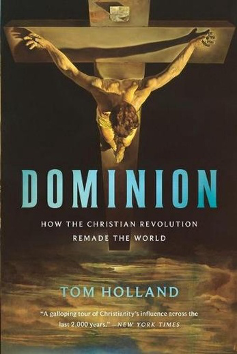
In his magisterial study, Dominion, the British writer Tom Holland set out to detail the ways in which Christianity has harmed the world.[i] Yet the more he studied its influence, the more convinced he was that it was Christianity taught the world about the dignity of every person, not pagan thought, nor enlightenment philosophy. The revolutionary idea only became thinkable with the teachings and crucifixion of a man whose disciples insisted He was also God; a God-man whose divine image (they claimed) is in every human being; a man-God whose self-sacrifice restored failing humanity to its proper dignitas. This idea, Holland argues, remade the world, and gave us a basis for judging right and wrong, even the rights and wrongs of religion. Good reasoning can take us a long way in thinking about these things. But our civilization’s deepest moral convictions—that every person matters, that the vulnerable deserve protection, that truth and goodness, love and virtue, are real and not just social constructs or survival strategies—emerge from the soil of faith.
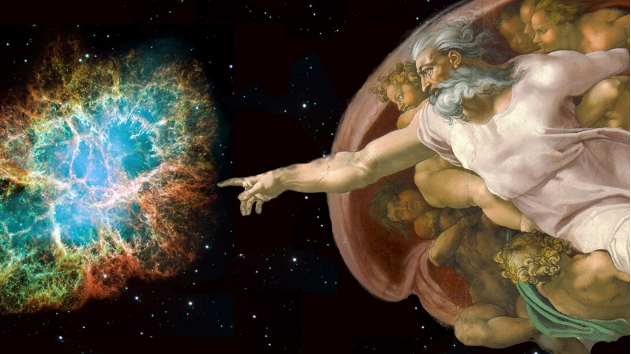
Now, Douthat and Holland were not denying the importance of scientific observation and inductive reasoning. Natural science matters and should not be viewed as a rival with faith. The physical world is indeed governed by ‘cause and effect’, and we have much to learn from the ‘laws of nature’. We rightly delight in what science delivers us, not just in technological benefits but in understanding. Many great scientists have also been great believers, and have thought their inquiries glimpse the mind of God. But if science tells us how things are, it cannot answer the big why questions. Why is there something, rather than nothing? Why do we feel moral obligation toward strangers? Why should we care for the vulnerable? Why, when standing before great beauty or great suffering, do we sense something beyond? Why do we search for meaning, purpose, vocation in life? Why do we hope for life beyond the grave?
These are ultimately faith questions, and they are no less real for resisting scientific explanation. But if much of good secular thought ultimately rests upon certain unprovable assumptions and a religious-cultural inheritance, what about faith itself? Our scriptures describe faith as “the substance of things hoped for, the evidence of things unseen”; as a relationship with the God who is the source of existence, truth and right living; as trust in a reality greater than our observations, a goodness that transcends our efforts, a strength and purpose beyond ordinary experience.[i]
None of which diminishes the responsibility of believers to apply their critical intellect to things. People of faith should not be gullible people or blind fanatics. Like anyone else, they must assess what they are told against canons of logic, proof, consistency. And they have the additional task of reconciling faith and reason, empirical knowledge with deeper wisdom. But it is also true that many of our most precious experiences—like love and compassion, joy amidst suffering, hope and purpose, conscience and self-sacrifice—are not satisfactorily explained with the scientific method alone, even if it has some important things to say. These things are real, in some ways more real than the ephemeral realities into which natural science inquires. But here the sciences need the complementary wisdom of the arts—of poetry, music, scripture—if we are to even approximate satisfactory answers.
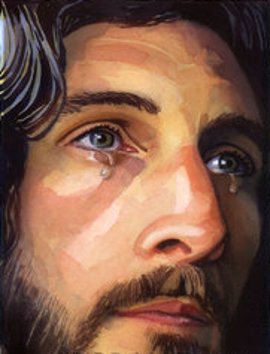
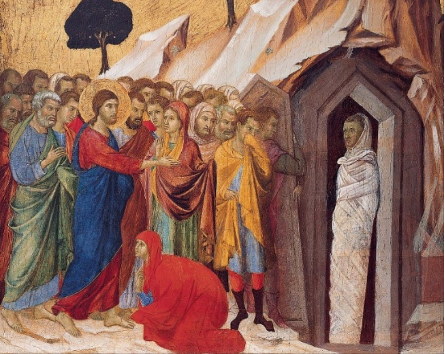
Today’s Gospel recalls the raising of Lazarus (Jn ch. 11). As a miracle, it doesn’t get much bigger and it proved to be a turning point in people’s attitudes to Jesus. But it also shows us Jesus at His most human: separated from and close to His friends; heartbroken over the loss of Lazarus; grieving with the sisters. No mere theory or creative principle, Jesus feels what we feel. He weeps and sighs.
This is Jesus, God at His most human. But it is also Jesus, man at His most divine. He knows what will happen in advance. He delays going to Bethany so He might raise Lazarus and our faith with him. He promises resurrection on the last day and reveals Himself as its source.
With the same creative word with which, at the dawn of time, He called Adam and all humanity into being, He now calls Lazarus into re-being, restoring his life’s breath. As He promised through the prophet Ezekiel and the evangelist Paul, “I am going to raise you from your graves, my people. And that you may know that I have power to do this: see me resuscitate Lazarus, see me rise glorious from the dead Myself. For I am the Resurrection and the Life.” (cf. Ezek 37:12–14; Rom 8:8-11)
Lazarus comes out still wrapped in burial cloths. St Augustine thought this an allegory for all of us, bound by sin, vices, our continuing mortality.[i] God’s words raise us up in Baptism and promise more in the future. But our human nature remains fragile. We are easily entangled by habits and wounds. So, Jesus commands the bystanders, the Church, “Unbind him, and let him go free.” The power to raise people from bodily or spiritual death belongs to God alone. But the ministry of unbinding—of patiently exhorting, absolving, supporting, and otherwise setting free—Jesus entrusts to His Church.
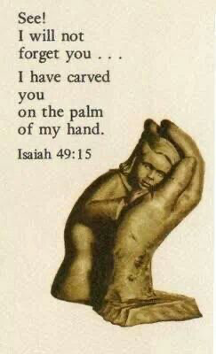
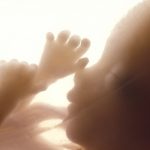
Christians are graced to know by faith that the God, who loved us into being and has sustained us from conception, will care for us through life till death, through resurrection to eternity. He calls us to treasure every life, as He does, each one an image of God. Human dignity is divinely given, not earnt by anything we do, not conferred by biased human societies and their imperfect laws, not measured out by science and technology either. God weeps, and we with Him, for all those innocents lost each year, each month, each day in our world and in our city. Every life, seen and unseen, born and unborn, stands in relationship with Him and will not be forgotten (cf. Isa 49:15).
For the past forty days I’ve been inspired to see some of you peacefully praying the Rosary outside our state parliament for respect for human life. We must engage in the debates of this world, to make our laws better, our culture kinder, our care for each other greater. But in the end, what we most need is to stand where Martha stood, at the threshold of the impossible, begging the Lord’s intervention. There we will hear Him say, “I am the Resurrection and the Life. Whoever believes in Me, even if he dies will live forever.”
[i] Augustine, Tract. Jn 49.3.