

14th July 2026
Written by Andreas Wailzer 13th July 2026
Originally published on LifeSite News
‘Catholic lawmakers who have voted’ for assisted suicide ‘will no longer be able to receive Communion,’ a bishop has warned ahead of France’s assisted suicide vote.
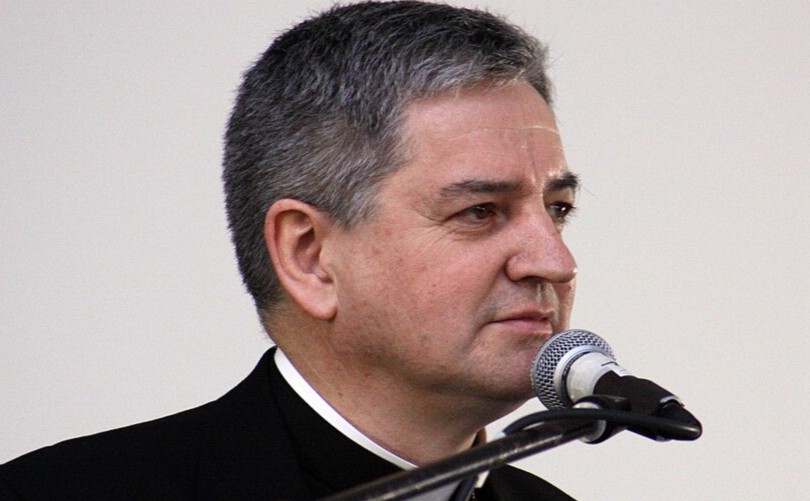
(LifeSiteNews) — French Bishop Marc Aillet has said that Catholic legislators who vote in favor of assisted suicide in an upcoming parliamentary vote cannot receive Holy Communion.
In an interview with France Catholique, Aillet was asked about the upcoming vote on July 15 in the French National Assembly that could lead to the legalization of euthanasia in the country.
“The issue of euthanasia or assisted suicide is not merely a matter of religious belief,” the bishop of Bayonne, Lescar and Oloron, France, said. “It touches on natural law – that is, the foundation of respect for all human life in a civilized society.”
“When a member of Congress identifies as Catholic while supporting legislation that authorizes the taking of life, he objectively places himself in opposition not only to the Church’s constant teaching but also to a fundamental principle of human reason,” he stressed. “The instruction Samaritanus Bonus, published by the Congregation for the Doctrine of the Faith, clearly reaffirmed that euthanasia is ‘an intrinsically evil act, regardless of the circumstances.’”
“A Catholic engaged in public life cannot ignore this.”
Asked whether this would have consequences for Catholics in Parliament who vote in favor of euthanasia or assisted suicide, Aillet explained, “Everyone must examine their conscience to ensure consistency between their actions and the faith they profess. Public support for a law that is seriously contrary to the Church’s moral teaching poses a real problem of ecclesial coherence.”
“Catholic lawmakers who have voted for this bill must weigh its consequences. If they are aware of this inconsistency, they will no longer be able to receive Communion,” he stated.
“The Church is justified in reminding them of this, as some bishops have done in the United States. I would like to invite them to a sincere examination of conscience. Do we have the right to make the deliberate taking of a human life a response to suffering?”
The political debate around assisted suicide in France has been raging in recent months. Though the Senate (the upper House of the French Parliament) narrowly rejected the government’s “end-of-life bill” for the third time, the legislation now returns to the National Assembly (the lower house), where it is expected to pass. Since the National Assembly has the final say in the event of a deadlock between the two chambers of Parliament, an assisted suicide bill would likely become law if it passed on July 15.
Aillet has called on the faithful to pray and mobilize against the bill.
In a statement released in May titled “Thou shalt not kill,” the bishop urged prayer, fasting, and direct civic engagement to defend what he observes to be the foundational prohibition against killing human beings that remains necessary for civilized society.
When Aillet was asked if people who requested assisted suicide would endanger the salvation of their souls, he replied: “The Church continues to affirm that suicide remains objectively contrary to the will of God, who is the master of life. But she also takes concrete situations into account. Suffering, loneliness, depression, and family or social pressures are sometimes so intense that they can profoundly impair a person’s freedom. This is why pastoral discernment is essential.”
“The priest’s role is to help the person rediscover hope, be reconciled with God, and renounce their plan. This spiritual accompaniment consists of helping them choose life until its natural end, never of condoning a lethal act.”
“Regarding Christian funerals, each situation must be examined with caution,” he stated. “The Church takes many factors into account, particularly any signs of repentance before death. Nothing should be done that would suggest the Church approves of euthanasia.”
Aillet concluded that assisted suicide and the question of preserving human life is ultimately a spiritual issue.