

19th August 2026
Written by Archbishop Julian Porteous
Published on “Grace & Truth”
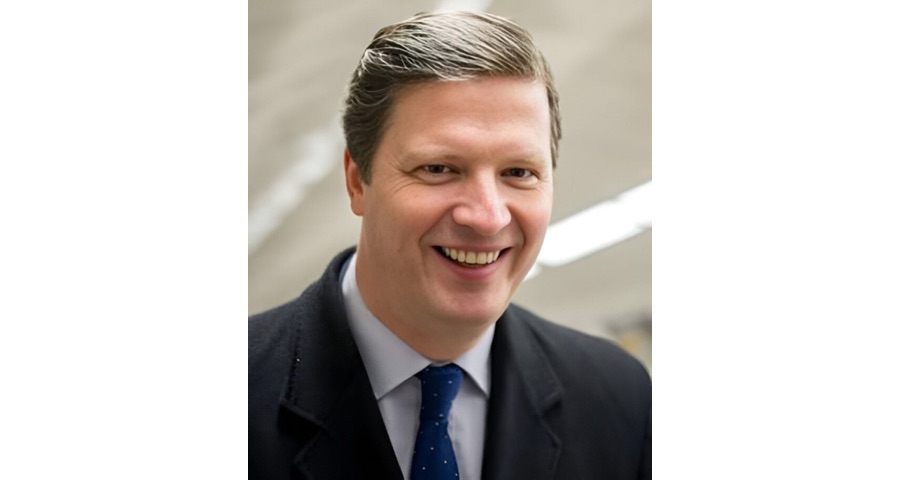
Following his retirement as Ambassador of Hungary to the Holy See (Archduke) Eduard Hapsburg has indicated that he will be working with the Danube Institute. The Institute is a think tank which seeks to promote cultural conservatism. He intends to continue his work of promoting the path to true human flourishing which is reflected in his two books.
In his 2025 book, Building A Wholesome Family in a Broken World: Habsburg Lessons from the Centuries, he continues to explore themes that are found in previous work, The Habsburg Way. 7 Rules for Turbulent Times.
As with his previous work this book draws on the experience of his family over the centuries. The Hapsburgs have been a significant presence in European history since the thirteenth century.
Having large families has been part of the Hapsburg way.
Marie Antoinette, for example, guillotined in the French Revolution, was a Hapsburg, the fifteenth of sixteen children in her family. That the family continues to be a significant contributor to European life is testimony to its enduring values, centred on the strength of family life.
As the title indicates this book focusses particularly on the family. It offers advice on how to build a “wholesome family in a broken world”. In drawing from examples of his family over the centuries, he offers practical advice on how to form strong family relationships and to find through marriage and family the way to happiness.
In particular, Eduard highlights two key elements for a successful family – having many children and possessing a committed faith fuelled by prayer.
In speaking about the importance of having a number of children he comes face to face with attitudes found in modern culture which oppose having numbers of children. Various reasons for this attitude include loss of hope for the future of humanity to the sheer costs associated with raising a large family and the material sacrifices required.
Eduard argues for the benefits of giving attention to the formation of large families. He comments, “It’s true, in our age, that many families are broken. But as much as the technocrats in our consumer society would like to keep us all alone, glued to screens and spending money, this is not what we are meant to be. We are meant to be in families—families that are not broken but whole, wholesome, and healthy. Family life is what everybody should be striving for. It is what everybody really wants”.
He is aware of the damage being done to families in our contemporary culture. When interviewed on his book he comments, “We have to understand that we are at the end of about sixty years post sexual revolution, and of contraception mentality. Most people around us have never experienced a “normal” family life growing up; they take their ideas about relationship from the media and their surroundings. Families in media only have two children; sexual happiness only comes from extra-marital relationships. They are clueless how to even begin building a healthy and wholesome family. Because they don’t have the tools anymore”.
Drawing on the approach to marriage taken within his family line over the centuries, he notes that basing marriage on romance is a fairly recent phenomenon. In an interview he observed, “I would say the romantic idea of choosing your spouse out of love is a rather late element, not just in Habsburg marriage policy but in our world in general. Before 1800, you were mostly married away for political or alliance reasons. However, I would say the “Habsburg way” here was that you could at least be certain that your future spouse usually shared the core values of life (like the Catholic faith and the same concept of family), and that gave you a pretty good chance to a happy marriage, even if you met your spouse only on your wedding day”.
In his book he offers five items in his “Spouse Bucket List” to guide people in choosing a suitable partner in marriage.
The other key theme in the thought of Eduard Hapsburg is the importance of faith being the foundation of the marriage and family.
This faith, he emphasises, must be fostered by prayer. He quotes the example of two of his forebears, Blessed Charles I of Austria and his wife, Empress Zita, who ensured that prayer was at the heart of their family life. Faith expressed in a commitment to prayer, he insists, must be at the very centre of family life.
As the Christian life is focussed on a living relationship with God so a couple should also have as their focus a relationship with God realised in prayer. Eduard Hapsburg is convinced that a foundation in God is the necessary recipe for a stable and happy marriage. He simply says in his book, “Family and faith are so intimately intertwined.”
He makes the assertion which today seems out of fashion and countercultural: “Chastity is the way to happiness.” Commenting on this statement in his book he says in an interview, “I haven’t studied sociology or anything, so I won’t point to studies proving that a chaste life before marriage will lead to a happy, long, and fulfilling marriage. I can only speak from observing my surroundings, and of course from experience. If you are not faithful to your spouse before the marriage, you won’t be faithful in the marriage. It’s as easy as that. If you got used to changing partners, to pornography and self-gratification, you will always search for something in sexuality that it isn’t.” He adds that chastity “doesn’t mean no sex. It means sex where it belongs, the way God planned it for us. This is the way to happiness”.
In both of his books Eduard Hapsburg expresses with candour and humour a vision of human life that places marriage and family at its centre. It is refreshing to hear him speak with such deep conviction on this understanding of family founded as it is in his own experience and that of his illustrious dynasty.