
3rd November 2026
Written by Dr. June Joseph, PhD
My understanding of family life has been shaped by both its wounds and its capacity for redemption. Long before I studied maternal and child health, I had witnessed how the absence of support within a family could affect a mother, marriage, and the children growing up around them.
My mother experienced deep isolation in her marriage. My father was a good man, raised in a traditional Indian family whose experiences of pre- and post-colonial Malaya were marked by displacement, war, poverty, and insecurity. His loyalty to his mother and sisters was understandable, but it also meant that he struggled to establish the boundaries needed to protect his marriage. My mother was often left feeling that she came second to his family of origin.
There were also profound losses. My mother lost her firstborn child at just two and a half years old, my brother dying in her arms. She was not permitted to grieve; her mother-in-law forbade her from crying. She was also made to bind her breasts rather than breastfeed her own baby, restricting her from developing attachments with her own offspring. These painful experiences of loss, isolation, and continuous matriarchal violence had massive repercussions on her motherhood.
Between 1996 and 2000, my mother found refuge in her faith. In an isolated room, with an image of Divine Mercy and the Diary of (then Bl.) St. Faustina, she prayed. Alongside daily Mass attendance, her devotions became a source of strength amid unimaginable suffering. She died on 28 March 2000, during the Great Jubilee Year, on the birthday of St. Teresa of Avila. I was sixteen.
My father’s grief brought a profound awakening. He began to recognise the damage that had been done and the importance of changing the patterns he had inherited. He embraced forgiveness and established healthier boundaries with his extended family. For the next 10.5 years, he became both father and mother to my sister and me. He was our nurturer and best friend, forming our lives through daily prayer, the Rosary, First Friday devotions to the Sacred Heart, and a deep commitment to Scripture. He died on 8 September 2010, the Feast of the Nativity of the Blessed Virgin Mary.
Their story taught me that family wounds can be inherited, but they need not determine the future. Scripture calls a married couple to leave father and mother and cling to one another and become one flesh (Genesis 2:24; Matthew 19:5). This is an invitation to establish a new covenantal bond, with the mutual commitment and boundaries that allow marriage to flourish.
I grew up a rather timid child. The household tensions, alongside the oppressive personalities of my father’s sisters, often left me feeling intimidated. I found refuge beyond the immediate family environment in the Church, parish youth groups, and study. My involvement in Caritas missions helped me look beyond my own circumstances and encounter the suffering of others. I did not yet understand how these experiences were shaping my vocation.
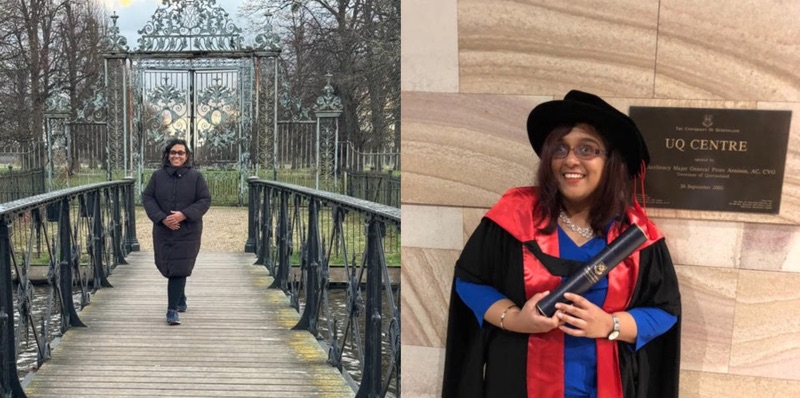
In 2014, I arrived in Australia from Malaysia, having been granted a competitive, merit-based Australian Government Scholarship to pursue a PhD at the University of Queensland. I chose to research the infant-feeding experiences of refugee women from Vietnam and Myanmar because I had identified a gap in maternal and child health policy and knowledge. I wanted to understand how women navigated motherhood and infant feeding after displacement while raising children in a foreign land.
I had not set out to heal my own family history. Yet, as I listened to these women, their experiences of displacement, exclusion, vulnerability, and resilience gave me a deeper understanding of the many ways mothers carry responsibility for their children, often with inadequate support. Their stories deserved to be heard in their own right. At the same time, they helped me revisit my own mother’s experiences with greater compassion.
I began to see my doctoral journey through the encounter between Jesus and the Samaritan woman at the well (John 4:1–42). Christ met her within the complexity of her life, spoke to her with dignity, and entrusted her with a witness to others. In listening to mothers whose lives had been shaped by hardship, I encountered questions of dignity, belonging, motherhood, and faith that reached far beyond my original research questions.
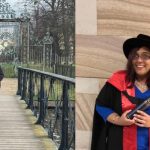
My thesis was submitted on 28 March 2018, the eighteenth anniversary of my mother’s death. My PhD was conferred on the feast of Saints Louis and Zélie Martin, with notification that it was passed outright, classified as top 10%, received exceptional reviews and awarded with the Dean’s Award of Outstanding Dissertations. My graduation ceremony took place on 12 December, the Feast of Our Lady of Guadalupe. These dates became meaningful reminders of how my academic journey had become intertwined with my faith, family history, and an unraveling mission.
Australia gave me far more than an extraordinary academic opportunity; it welcomed me as guest and became a deeply cherished second home. Through the exceptional generosity of the Australian people and the vibrance of its faith communities, I encountered a vision of family life I had not personally experienced growing up. Through the Emmanuel Community, I came to know families whose holy marriages and faith offered a living example of the Catholic family. Their witness and involvement in the Encounter Schools of Mission, helped me heal and understand the Domestic Church lived through everyday love, friendship, commitment, hospitality, and service.
I also found a different kind of refuge among the Carmelites in Ormiston, particularly through (then) prioress Sr. Moira Kelly. I was able to share aspects of my life that I had never spoken about openly. She listened and accompanied me, becoming one of my strongest prayer warriors. Their contemplative witness reminded me that a mission of service is sustained not only by what we do in the world, but also by prayerful sacrifice.
As a grateful guest who has benefited so profoundly from this nation’s largesse, I feel a deep desire to give back to the country that nurtured my vocation and transformed me as a person. The timid child who once sought refuge from household tensions found a space here to grow, developing the confidence, critical intellect, and voice to serve as a writer and speaker. Australia possesses incredible foundational blessings, rooted in a heritage of opportunity, prosperity, and a culture that values human welfare.
Yet, it is out of love for my second home that my heart goes out to where hardships still linger – not only within remote rural areas and Indigenous communities, but increasingly in the everyday struggles of urban families facing housing stress and food insecurity. These realities remind us that wealth alone cannot heal the soul of a home, nor can state programs replace the transformative power of the Domestic Church.
Today, as major Australian archbishops highlight a cultural landscape that treats the most vulnerable as disposable, we see how modern families face relational and economic vulnerabilities that no bureaucratic framework can fully remedy. When public policies incentivise termination of pregnancy over holistic maternal support, expectant parents, the unborn, postpartum mothers are left fundamentally isolated.
While courageous pro-life apostolates – most notably Family Life International (FLI) through its dedicated frontline mission – respond to this crisis by offering immediate sanctuaries of hope, there remains a vital need to expand this ecosystem of care. This is where a rigorous, evidence-based maternal and child health framework can serve as an invaluable asset. By integrating clinical and sociological insights with the Gospel of Life, we can deepen our understanding of the physical, psychological, and spiritual anxieties mothers experience both during crisis pregnancies and throughout the crucial postpartum months. My mission is to equip frontline ministries with this framework – building parish-based communities to ensure no mother walks her journey alone.
The Australian Bureau of Statistics reported that in 2025, one in four households experienced at least one cash-flow problem. Among one-parent families with dependent children, 42% could not raise $2,000 within a week for something important, compared with 23% of couple families with dependent children. Only 53% of Australians had weekly face-to-face contact with family or friends outside their household, down from 68% in 2019. These figures elucidate that, beyond institutional programs, families need organic, relational networks of support (ABS, General Social Survey 2025).
The Australian Institute of Health and Welfare reports that one in four women and one in fourteen men have experienced physical or sexual violence from an intimate partner since the age of fifteen. Family violence can profoundly affect children and shape their understanding of relationships and safety. Supporting marriage and family life should therefore also protect those who are vulnerable so that no one is expected to remain in an unsafe situation (AIHW, Intimate Partner Violence, 2026).
These realities have helped bring my personal history, faith, and professional formation together. I began to see that my background in maternal-child health is intimately tied to the pastoral mission of the Church. Both had brought me closer to the realities of families and to the dignity of mothers, fathers, and children.
Carmelite spirituality – especially writings of St. Teresa of Avila and St. Thérèse of Lisieux, and my PhD patron St. Edith Stein – shaped my understanding of a women’s vocation to love through hidden and ordinary service. Pope St John Paul II’s Theology of the Body providentially illuminated my research – revealing a Eucharistic dimension to a mother’s life. In the daily giving of herself, most visibly through nursing and nurturing, she mirrors Christ’s own words: “This is my body, broken for you”. Breastfeeding therefore reflects the interdependence of the maternal-infant pair. However, this must never become a measure of a woman’s worth; every mother needs compassion and regardless of her infant feeding circumstances.
I believe the Church has an important pastoral responsibility here. Preparing couples for marriage should move beyond fulfilling an administrative or sacramental requirement into helping them understand family histories, expectations, and patterns they bring into marriage. Pastoral conversations can help couples recognise unresolved wounds, unhealthy dependencies, and the need for healthy boundaries before these become sources of conflict.
Parishes, too, can become communities of solidarity. Newly married couples and new parents need friendship, guidance, and tangible support. Mothers recovering after childbirth should not feel forgotten once the baby has arrived. Fathers need encouragement and accompaniment as they embrace responsibilities. Families experiencing grief, hardship, or crisis should know that they are accompanied. Spiritual accompaniment is invaluable, while professional counselling, healthcare, and safeguarding must also be available.
Public policy has a role in creating environments in which families flourish. Appropriate maternity and paternity protections, breastfeeding support, and financial assistance for families matter. While state measures cannot replace family love, they help ensure vulnerable homes are never left completely unsupported.
Looking back, every chapter of my life has converged into this mission. My mother’s sufferings exposed maternal vulnerability, while my father’s transformation proved that inherited family wound can be broken through forgiveness. Communities of faith taught me the sustained power of prayer, while my doctoral encounter brought me deep into the lives of mothers whose stories now drive my work.
I am incredibly grateful for the academic, professional and spiritual gifts Australia gave me. In today’s fractured culture, my discernment points to a timely calling, rooted in my Catholic faith, to stand with the nation’s families. Beyond theories, building a culture of life is about how we treat mothers, fathers, and children in the messy realities of everyday life. This means showing showing up with compassion and practical help – ensuring every family is welcomed and given the opportunity to flourish.
Dr June Joseph is a Catholic public health academic, researcher and anthropologist
working in the intersection of faith, maternal-child health and the first 2000 days of life –
right from the point of fertilisation.
She is contactable for discussions and dialogue at jmjune83@gmail.com or j.joseph@uq.edu.au